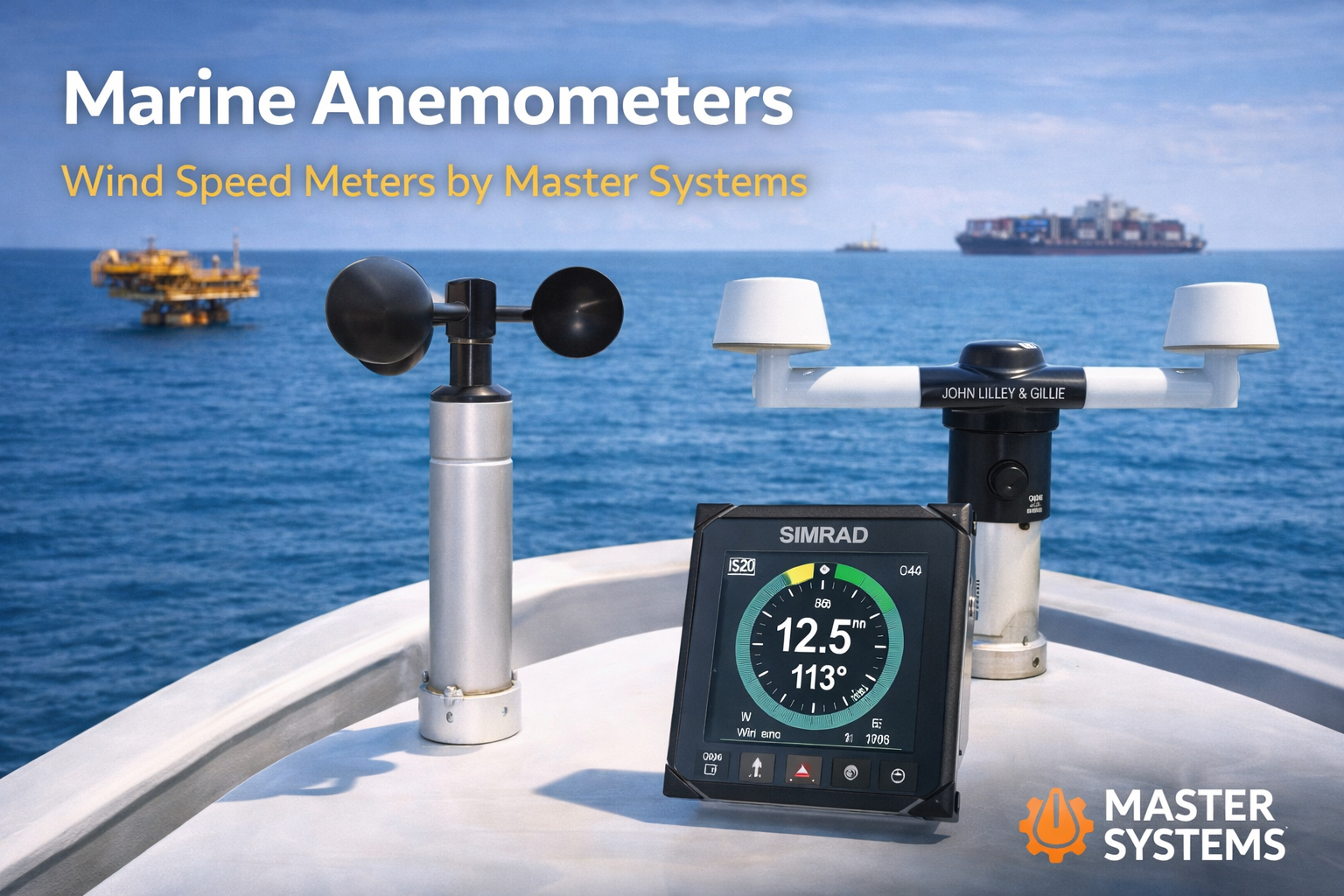

ANEMOMETER

alt="MASTER-SYSTEM"
WaveIcon

An anemometer is an instrument used to measure wind speed and often wind direction. It is a standard tool in the maritime industry, where accurate wind data supports safe navigation, engine control, autopilot systems, and offshore operations. Marine vessels use anemometers on the bridge or mast to monitor real-time weather conditions at sea.

What is an Anemometer?

An anemometer is a meteorological device that measures how fast the wind is moving. Some models also measure wind direction, gusts, and air temperature. In the maritime environment, this information is essential for navigation, docking, maneuvering, and safety during storms or offshore activities.

Why is an Anemometer Used in Marine Operations?

Marine operations depend heavily on weather awareness. Wind affects vessel heading, fuel efficiency, docking strategy, and safety. Offshore platforms also rely on wind data for crane operations, helicopter landings, and structural safety.

An anemometer helps by providing:

  • Real-time wind speed data
  • Wind direction monitoring
  • Gust detection for decision-making
  • Safety alerts for high wind conditions
  • Input for autopilot and navigation systems

On modern bridges, wind information is displayed on digital screens and integrated with radar, GPS, and autopilot systems.

How is an Anemometer Used?

Anemometers are mounted on masts or bridge wings where airflow is unobstructed. The device sends wind data to bridge displays or navigation systems. Crew members use this data while docking, navigating narrow channels, or operating in high seas. Offshore facilities use anemometers for safety protocols and operational planning.

How Does an Anemometer Work?

The working method depends on the type:

  • Cup anemometers measure wind by counting rotations of rotating cups.
  • Ultrasonic anemometers calculate wind using ultrasonic sound waves between sensors.
  • Vane anemometers use a propeller and a vane to detect speed and direction.

The resulting data is sent as electrical signals or digital values to bridge systems for real-time visibility.

Characteristics of Marine Anemometers

Marine anemometers are built to handle harsh sea conditions, including salt corrosion, humidity, and vibration. Key characteristics include:

  • High measurement accuracy
  • Corrosion-resistant housing
  • Wide wind speed range detection
  • Stable performance in extreme weather
  • Digital or analog signal output
  • Integration with NMEA and navigation systems

Modern models are compact, energy-efficient, and compatible with advanced marine bridge systems.

Types of Anemometers Used in the Marine Field

Several types of anemometers are common in the maritime industry:

1. Cup Anemometers

Use rotating cups to measure wind speed. Simple, reliable, and widely used for shipboard measurements.

2. Vane Anemometers

Use propellers to measure wind speed and a vane to identify direction. Suitable for general navigation.

3. Ultrasonic Anemometers

Use ultrasonic pulses to detect wind speed and direction. High accuracy, no moving parts, and preferred for modern marine systems.

4. Hot-Wire Anemometers

Use heated wires to detect airflow changes. Mainly used for research, less common at sea.

5. Pressure-Based Anemometers

Use pressure changes to estimate wind speed. Found in aviation and some marine applications.


Anemometers Offered by Master Systems

Master Systems supplies a wide range of marine-grade anemometers from global manufacturers. Below are anemometers supported by Master Systems:

  1. NASA MarineClipper V2
  2. John Lilley and Gillie Model 2050 MKII
  3. John Lilley and Gillie – Model 2080 MKII
  4. R. M. YoungModel 05106
  5. R. M. Young – Model 86000
  6. SIMRADModel IS42

Each model supports different vessel classes and operational requirements, including digital displays, integrated sensors, or ultrasonic wind measurement systems.

Comprehensive Support from Master Systems

Master Systems is a trusted marine electronics repair company and marine calibration service provider in the UAE. We support anemometers across commercial, naval, and offshore fleets in the region.

Our services include:

  • Installation & commissioning
  • Repair & troubleshooting
  • Calibration & certification
  • Bridge system integration
  • Upgrade & replacement
  • Technical advisory

We ensure full compatibility with navigation systems, autopilots, ECDIS, and other bridge electronics.

Conclusion

Anemometers play a vital role in safe and efficient maritime operations. From navigation and docking to offshore coordination, accurate wind data supports better decisions at sea. With a strong portfolio of marine anemometers and comprehensive technical services, contact us for continued support of the UAE maritime industry with reliable solutions that meet global standards.