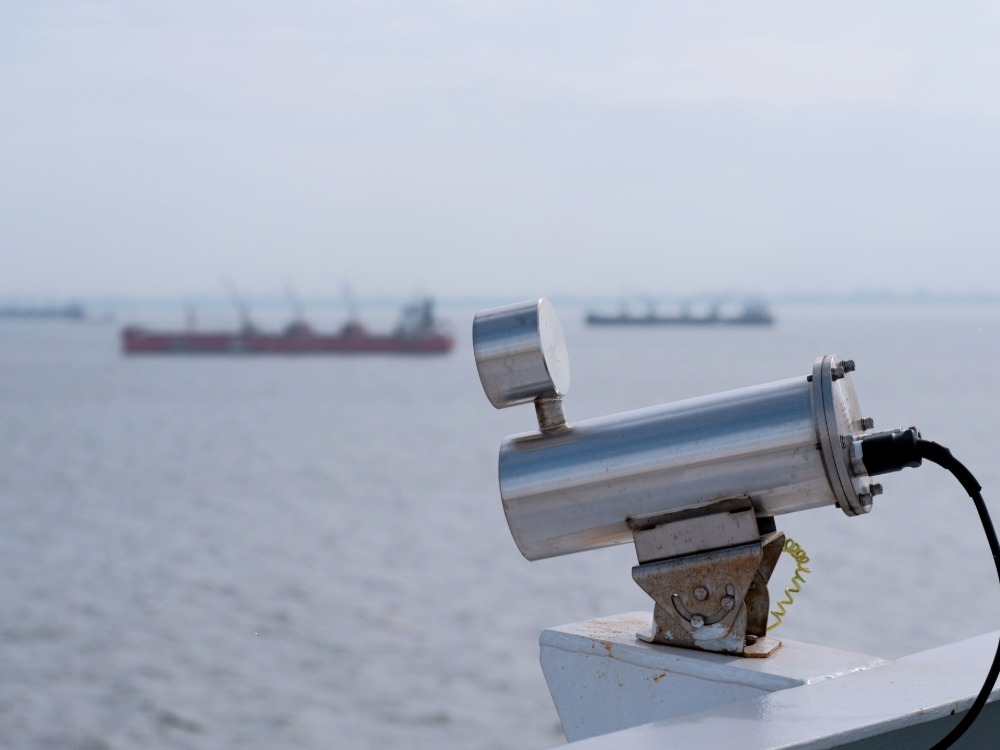

New CCTV regulations in Indian waters: key highlights and requirements

CCTV new regulation in Indian waters
WaveIcon

Maritime security regulations in India are continuously developing as ports enhance their monitoring and vessel safety protocols One of the latest requirements implemented by the Indian  Directorate General of Shipping (DGS) in MS Notice 2024 is mandatory CCTV compliance for vessels, both Indian-flagged vessels and foreign-flagged vessels visiting Indian ports under a Specific Period Licence (SPL).  

This new mandate ensures that every vessel provides real-time visibility, security accountability, and operational transparency while inside port limits. Here, Master Systems, one of the CCTV suppliers in UAE, explains the updated guidelines and how shipowners can ensure seamless compliance.

Why has CCTV become important in Indian waters

In recent years, there have been many cases of crew disappearances, suspected suicides, and man-overboard incidents. The absence of CCTV footage made it impossible to determine the exact time or location of these events. Unavailability of this crucial information has directly affected Search and Rescue (SAR) operations. Additionally, vessels have faced collisions, onboard casualties, and security breaches, where investigations were delayed due to the absence of visual documentation. These issues collectively highlighted the necessity for a dependable, ongoing visual documentation. As a result, the Directorate General of Shipping (DGS) issued a directive mandating CCTV systems on both Indian-flagged and foreign ships arriving at Indian ports.

Vessels comply with this regulation

The new CCTV mandate issued by the DGS applies to a wide range of vessels operating in or entering Indian waters. 

  • All Indian flagged vessels above 500 GT are required to install CCTV compliance in the prescribed timeline. 
  • The rule also extended to all newly constructed vessels of any size, ensuring that modern safety systems are incorporated from the construction age.  
  • The ships that convert to the Indian flag must also meet requirements before re-registration. 
  • This mandate is applicable to vessels registered under foreign flags that visit Indian ports, thereby making the use of CCTV a mandatory safety requirement for international operators entering Indian jurisdiction.
  •  Both domestic and foreign vessels engaged in coastal operations must comply with updated safety standards.
  •  This requirement includes vessels operating under Special Permission Licensing (SPL) for coastal trade.

CCTV Requirements

As per the MS Notice & MS Notice 02 of 2025 guidelines,  the minimum technical  requirements for the cameras installed in the CCTV are:

  • 1080p Full HD camera for visibility and reliable incident review.
  • A frame rate of at least 30 fps is required to ensure smooth recording without motion blur.
  • Wide Dynamic Range (WDR) to capture clear images in bright or shadowed areas.
  • An IP66 or higher weatherproof protection, for cameras exposed to rain, snow and harsh deck conditions.
  • Infrared or low-light capabilities for nighttime operation.
  • Pan-Tilt-Zoom (PTZ) functionality for key areas.
  • Storage capability: 90 days of footage 
  • Marine-grade, type-approved equipment for engine rooms and high heat zones.
  • Encrypted data transmission for secure remote access by DGS and authorised agencies when required. 

Master Systems: a trusted compliance partner

As a trusted marine electronics repair company, Master Systems is fully equipped to support ship owners, managers and operators in meeting every aspect of the new DGS standards. With established operational hubs in India and overseas service capabilities from many strategic locations. We offer solutions built specifically for high-pressure maritime environments.

We deliver: 

  • Vessel-Specific Risk Assessment: Identifying high-risk zones and blind coverage areas, and designing layouts aligned with DGS camera-placement guidance.
  • Marine-Approved CCTV Equipment: Including IEC-certified, IP66/67/68-rated, and explosion-proof solutions for harsh environments.
  • Complete supply, installation & integration covering cabling, bridge monitoring setup, secure storage, and encrypted transmission.
  • Crew & ISM training programs for playback, evidence retrieval, and integrating CCTV into onboard safety protocols.
  • 24/7 global marine support with weekly checks and annual maintenance to ensure continuous system reliability.

Why this matters to the maritime sector

CCTV implementation onboard ships is no longer optional; it is a security backbone needed to:

  • Accelerate SAR response time by verifying real-time incident details
  • Provide factual evidence during legal or insurance claims
  • Improve navigation safety by recording bridge decisions
  • Enhance crew protection and welfare
  • Reduce ambiguity in accident investigations
  • Strengthen coastal maritime security monitoring

Conclusion

Every voyage needs to be safe, efficient and purposeful. The DGS new regulation helps to strengthen the safety and transparency of vessels and vessel operators in Indian waters. 

Contact Master Systems for your reliable and trusted maritime solutions.