Gyro Service in Lomé for Ships at Berth and Anchorage

alt="MASTER-SYSTEM"
WaveIcon

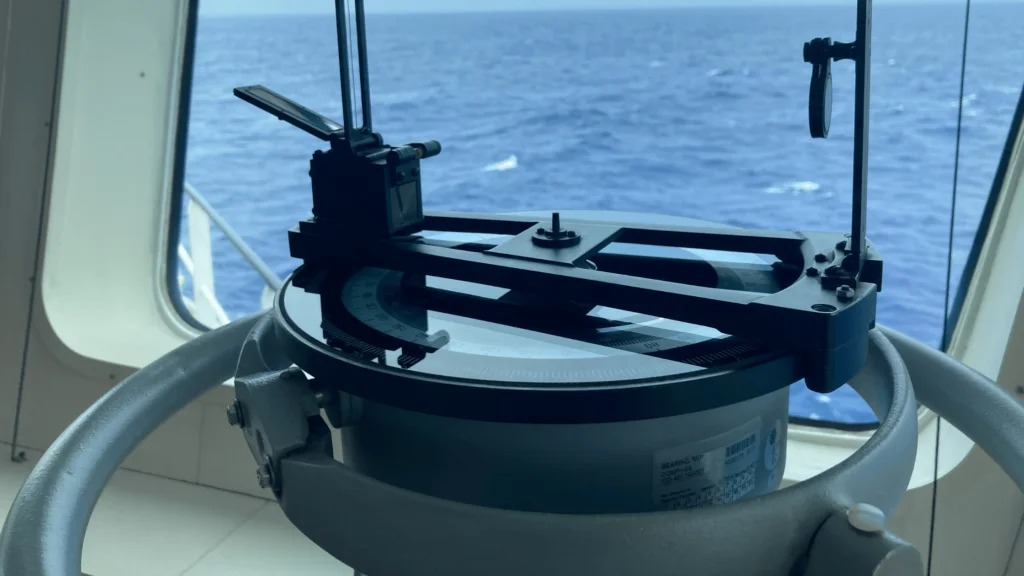
Master Systems provides gyro service in Lomé for container ships, tankers, bulk carriers and offshore vessels calling at the Port of Lomé, Togo. Our engineers repair gyrocompass faults, check heading accuracy, carry out annual servicing and realign repeaters, so bridge systems receive a correct heading before the ship sails.

Gyro Work During a Lomé Port Call

Lomé has become one of the main transshipment hubs on the Gulf of Guinea. Large container ships call to exchange cargo with feeder vessels, while tankers and bulk carriers often wait at the outer anchorage for a berth or for ship-to-ship transfers. These waiting periods make Lomé a practical place for gyro work, because the engineer can complete checks and repairs without delaying cargo operations.

Togo is a member of the Abuja MOU, the port state control regime for West and Central Africa. An inspector boarding at Lomé may ask for the gyro error record, check the heading on the repeaters and test the gyro alarm. A gyro that is drifting, alarming or out of service is a serious deficiency, since SOLAS Chapter V requires ships of 500 GT and above to carry a working gyrocompass.

Common Gyro Problems We Fix

Most gyro calls in Lomé involve one of the following:

  • Heading drift or large gyro error. The heading slowly moves away from the true value, or the daily error check shows a larger error than usual.
  • Long settling time. After start-up, the gyro takes much longer than normal to settle on a stable heading.
  • System alarms. Alarms for power supply, temperature, follow-up or sensor failure appear on the master unit.
  • Repeater mismatch. Bridge wing, steering or bearing repeaters show a different heading from the master gyro.
  • Interface faults. Radar, ECDIS, autopilot, AIS or VDR lose the heading input, or show heading errors.
  • Failure after a power cut. The gyro won’t restart or settle properly after a blackout or a shore power changeover.

Our Gyro Service in Lomé

Fault diagnosis and repair. Our engineer checks the master unit, power supply, sensor element, follow-up system and distribution unit to find the root cause, then repairs or replaces the faulty part.

Heading accuracy checks. We compare the gyro heading against an independent reference, adjust settings where needed and record the results for the ship’s log.

Annual servicing. We carry out the manufacturer’s recommended annual service, including cleaning, inspection and, where due, replacement of the gyro sphere, sensitive element, support fluid or other wear parts.

Repeater and interface alignment. We align all repeaters with the master gyro and check that every connected system receives the correct heading in the right format.

Installation and replacement. For older or failed gyros, we can supply and install a new system, or a modern maintenance-free unit, including commissioning and integration with existing bridge equipment.

Spare parts. We supply genuine spare parts and plan them ahead where possible, so repairs can be finished during the port stay.

Gyrocompass Brands We Support

Our engineers work on the gyro systems most often found on ships calling at Lomé, including:

  • Anschütz (Raytheon Anschütz): Standard 22, Standard 22 NX and Standard 30 MF
  • Sperry Marine: Navigat X MK1, MK2 and Navigat 2100
  • Tokyo Keiki (formerly Tokimec): TG-8000 and TG-6000 series
  • Yokogawa / YDK Technologies: CMZ700 and CMZ900 series
  • Simrad: GC80 and GC85

Spinning, Fibre-Optic or Maintenance-Free?

Traditional gyrocompasses use a spinning sensitive element and need annual servicing with regular replacement of wear parts. Newer fibre-optic (FOG) and hemispherical resonator (HRG) gyros have no spinning parts, so they need much less routine maintenance. However, they still need periodic performance checks and correct interfacing. If your existing gyro is becoming costly to maintain, our engineers can advise on a suitable replacement for your vessel.

How a Gyro Visit in Lomé Works

  1. Share the details: vessel name, IMO number, ETA, berth or anchorage, gyro make and model, and a description of the fault or service due.
  2. Pre-planning: we review alarm messages or photos in advance and prepare likely spare parts.
  3. Attendance: the engineer boards through the ship’s agent and carries out the work, usually while cargo operations continue.
  4. Sign-off: the gyro is tested with the crew, and a service report is issued for the Master and the technical superintendent.

Related Services in Lomé

Gyro faults often affect other bridge systems. During the same call, we can also help with radar repair in Lomé, Rutter sigma S6 service in Lomé and marine safety services at Lomé port.

Frequently Asked Questions

Can gyro work be done while the ship is at the Lomé anchorage?
Yes. Anchorage attendance is arranged through the ship’s agent, depending on launch availability and port permissions.

How often should a gyrocompass be checked?
The crew should check gyro error every watch, or at least daily, and record it in the log. A full service is normally done once a year, following the manufacturer’s schedule.

Why does my radar or ECDIS show a heading alarm?
It may be a gyro fault, but it can also be an interface, cabling or configuration problem. Our engineers check the whole heading chain before replacing any parts.

Can you replace an old gyro with a maintenance-free model?
Yes. We can advise on suitable replacements and handle the installation, commissioning and integration with existing bridge systems.

Contact Us for Gyro Service in Lomé

If your ship is calling at Lomé with a gyro fault, or the annual service is due, contact us with your vessel details and ETA. Our team will plan the engineer and spare parts around your port call.