Rutter in Turkey: Enhancing Marine Safety with Reliable Support

alt="MASTER-SYSTEM"
WaveIcon

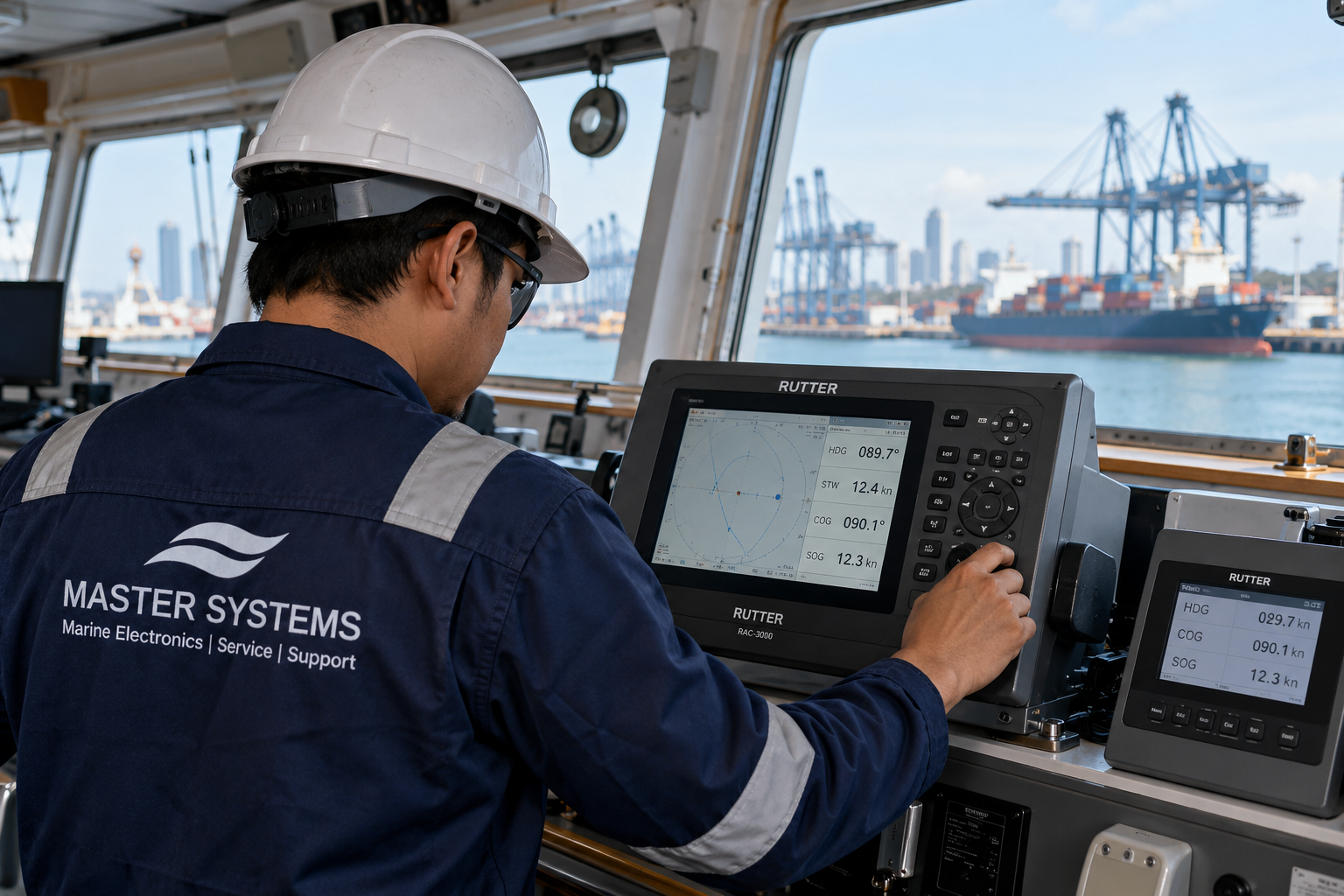
Master Systems installs, commissions and repairs Rutter sigma S6 radar processing systems on ships built, repaired and operating in Turkey. Much of our Rutter service in Turkey happens in the shipyards around Tuzla and Yalova, where new tugs, offshore vessels and response ships are fitted out and older ships come in for refits. We also attend ships working the Turkish Straits and calling at Istanbul, Izmir, Mersin and Antalya.

Rutter work in Turkish shipyards

Turkey’s repair and newbuild yards are concentrated around Tuzla, Yalova and Kocaeli. In 2024 they repaired or maintained about 46 million dwt of ships. Two kinds of Rutter work come out of these yards.

Newbuilds. Tugs, offshore support vessels, oil spill response ships and research vessels are often specified with sigma S6 for oil spill detection, small target surveillance or wave monitoring. We work with the yard and the bridge supplier from the design stage through to sea trials.

Refits and repairs. Ships in dry dock can have sigma S6 added, or have an existing system repaired, re-tuned or upgraded while cables and masts are accessible.

Decisions to make early on a newbuild

Fitting sigma S6 is much easier when it is planned before the bridge and mast drawings are frozen. These are the questions we work through with the yard:

  • Which radar? sigma S6 can use the ship’s own X-band navigation radar. Some ships fit a dedicated Rutter Radar-100S6 so oil spill or wave work never competes with navigation.
  • Antenna position: antenna height and the view around the ship affect detection range, especially for small targets and oil.
  • Processor and display location: where they go on the bridge, and how they connect to the bridge network.
  • Interfaces: heading, position and speed inputs, plus any link to an ECDIS or response management system.
  • Applications and licences: which sigma S6 applications to license at delivery, and which to add later.

With these settled early, the installation fits the yard programme and the sea trial becomes a final check.

Currents, small craft and the Turkish Straits

The Bosphorus and the Dardanelles have strong surface currents and heavy local traffic: ferries, fishing boats and small craft crossing the shipping lanes. Two sigma S6 applications are suited to this:

  • Small Target Surveillance processes the radar signal to show small, low targets that a standard display loses in sea clutter.
  • Current Monitor and WaMoS II measure surface currents and waves from the radar image, so the master has measured data for manoeuvring, towing or offshore work.

In both cases, the system has to be tuned to the waters the ship works in. A setup copied from another vessel usually produces too many false alarms or misses targets.

Oil spill detection for response and port vessels

sigma S6 Oil Spill Detection finds slicks on the radar image, outlines them and tracks them. It works at night and in poor visibility, which is when cameras and lookouts are least useful. Rutter’s material describes detection and tracking out to about 4 nautical miles, with the vessel able to keep working at speed. For response ships, port service vessels and tankers working Turkish terminals, we install the system, connect it to the ship’s radar or a dedicated one, and set it up so the crew can use it on the first call-out.

Older Rutter VDRs

Some older ships coming into Turkish yards still carry a Rutter VDR-100G2 or G3 voyage data recorder. Rutter sold its VDR business to Netwave in 2011. We test and repair these recorders where parts are available, and a dry docking is a good time to replace one with a Netwave system if spares have run out.

What a service visit covers

On an existing sigma S6 system, the engineer:

  • checks the radar interface and signal quality
  • confirms the heading and position inputs
  • reviews alarm and detection settings against how the ship is now used
  • applies software updates
  • confirms that recording and screen capture work

Faults are repaired on the same visit where parts allow. You receive a service report listing the settings and any parts replaced.

Where we attend in Turkey

  • Shipyards: Tuzla and Yalova, including the Altınova yards
  • Istanbul: port and anchorages, and ships transiting the Bosphorus by arrangement with the agent
  • Ports: Izmir, Mersin and Antalya

For urgent faults, our team answers 24/7.

Questions about Rutter service in Turkey

Can sigma S6 be added to a newbuild late in the build?
Yes, but it costs more and takes longer once the mast and bridge are finished. The best time to bring us in is when the bridge equipment is being specified, with commissioning at sea trials.

Can extra sigma S6 capability be licensed for a single project?
Rutter introduced short-term leasing of additional capabilities for existing sigma S6 systems. We can check what’s available for your system and load the licence before the job starts.

Will Small Target Surveillance cope with traffic in the Sea of Marmara?
It’s designed to improve detection of small targets in clutter. Results depend on tuning, so we set it up for the waters the ship will actually work in.

Our ship has a Rutter VDR and is going into dry dock at Tuzla. Should we replace it?
If parts for your model are still available, a test and repair may be enough. If not, the dry docking is the right time to fit a replacement.

Is Rutter service in Turkey available outside office hours?
Yes. Urgent faults are handled 24/7.

Book Rutter service in Turkey

Call +971 4 5519370 or +971 55 9931140, message us on WhatsApp at +971 55 7067698, or email info@mastersystems.com. Tell us the vessel or hull number, the yard or port and the dates, and whether the job is a new installation, a service visit or a Rutter VDR.