Offshore Safety Services in Netherlands

alt="MASTER-SYSTEM"
WaveIcon

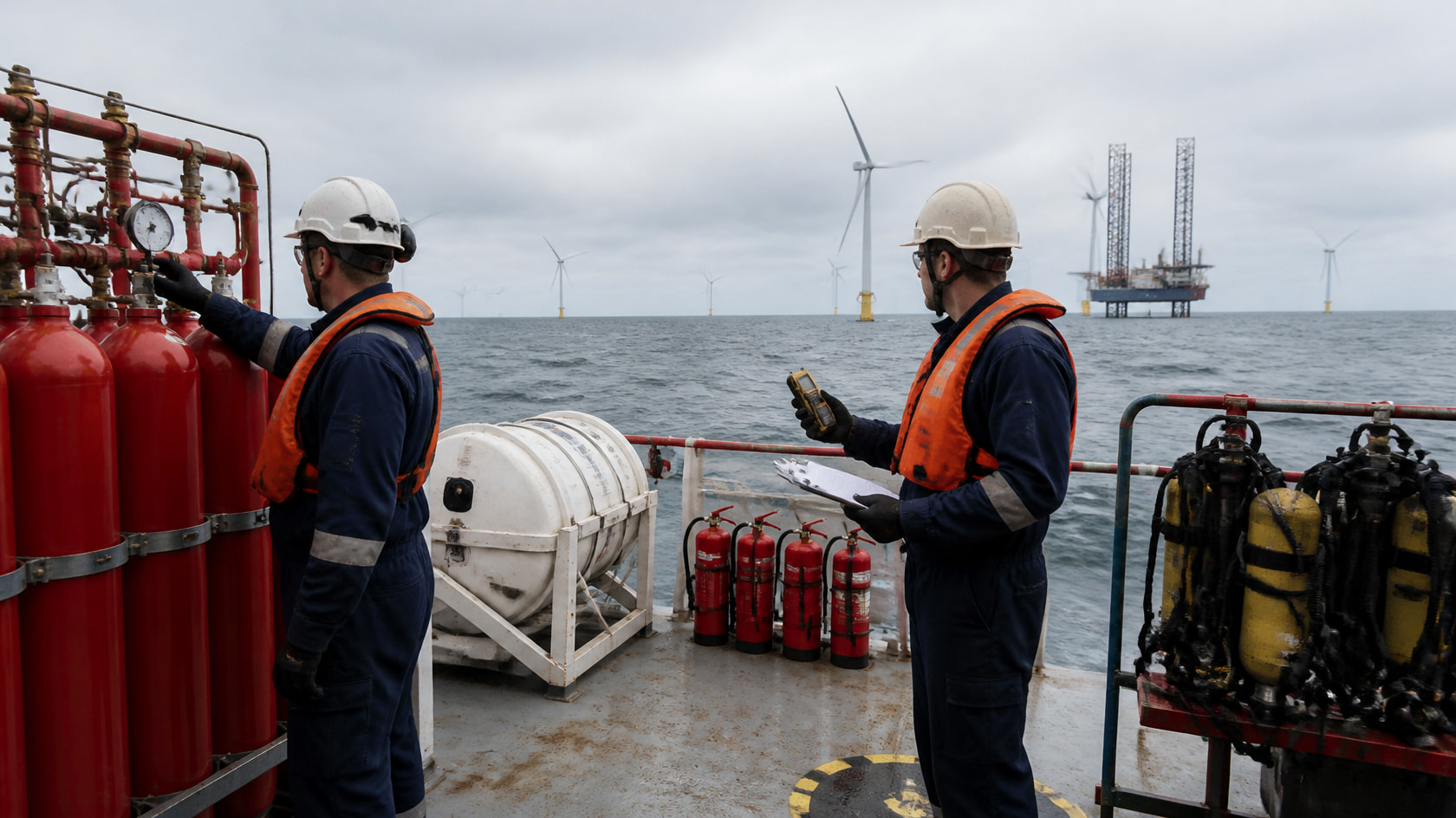
Offshore work carries real risks. Fire, gas leaks and emergency evacuations are all possible on vessels, platforms and support units. That’s why safety equipment has to be inspected, maintained and certified at regular intervals. Master Systems provides offshore safety services in Netherlands for vessel operators, offshore contractors and asset owners who need dependable, well-documented service.

This page covers what our services include, which rules apply and how we work.

What Are Offshore Safety Services?

Offshore safety services cover the inspection, testing, repair and supply of the equipment that protects people and assets at sea. In simple terms, they make sure that safety equipment works properly when it’s needed.

These services typically apply to:

  • Offshore supply vessels (OSVs) and crew transfer vessels
  • Mobile offshore drilling units (MODUs)
  • Fixed and floating offshore installations
  • Offshore wind support vessels
  • Commercial ships working in or near Dutch waters

Our Offshore Safety Services

Master Systems offers a range of services under one roof. As a result, one service provider can often handle several safety items in a single visit.

Life-Saving Appliances (LSA)

  • Lifeboats, rescue boats and fast rescue craft
  • Davits, winches and release gear
  • Life rafts and hydrostatic release units
  • Lifejackets, immersion suits and lifebuoys

Fire-Fighting Appliances (FFA)

  • Portable and wheeled fire extinguishers
  • Fixed CO₂, foam and water-mist systems
  • Fire detection and alarm systems
  • Breathing apparatus (SCBA) and emergency escape breathing devices (EEBD)

Gas Detection and Calibration

  • Fixed gas detection systems
  • Portable gas detectors
  • Calibration and functional testing

Marine Electronics

  • GMDSS radio equipment
  • EPIRBs and SARTs
  • Navigation and communication systems

Supply and Certification

  • Spare parts and replacement equipment
  • Service reports and certificates for class, flag and client audits

Rules and Standards We Follow

Offshore safety work must follow international and national rules. The main ones are:

  • SOLAS (International Convention for the Safety of Life at Sea)
  • The LSA Code for life-saving appliances
  • The FSS Code for fire safety systems
  • IMO Resolution MSC.402(96) for lifeboats, launching appliances and release gear
  • The MODU Code for mobile offshore drilling units
  • Flag state, class society and manufacturer requirements

In addition, offshore installations in the Dutch sector are supervised by the State Supervision of Mines (Staatstoezicht op de Mijnen, SodM). Vessels calling at Dutch ports may also face Port State Control inspections under the Paris MoU.

Why Offshore Safety Services Matter

First, regular servicing protects people. Equipment exposed to salt, moisture and vibration can wear out faster than expected, and a trained technician can spot faults early.

Second, it supports compliance. Missing certificates or faulty equipment can cause audit findings, deficiencies or delays.

Finally, planned servicing saves time. When work is scheduled ahead, it can be done during normal port calls or crew changes instead of during unplanned downtime.

How We Work

Our process is clear and practical. Typically, it follows these steps:

  1. Request: You share the vessel or unit name, location, timing and equipment list.
  2. Planning: We confirm the scope, check due dates and arrange technicians and parts.
  3. Service: Our technicians inspect, test and service the equipment on site.
  4. Repairs: If we find defects, we report them and fix them with your approval.
  5. Documentation: We issue service reports and certificates once the work is complete.

Why Choose Master Systems

Master Systems supports clients with LSA, FFA, gas detection and marine electronics services. When you choose us for offshore safety services in Netherlands, you can expect:

  • Technicians who know SOLAS, the LSA Code and the FSS Code
  • Scheduling that fits your port stay or offshore rotation
  • Clear, accurate reports and certificates
  • One point of contact for several safety systems
  • Supply of spare parts and replacement equipment when needed

Get in Touch

If your vessel or offshore unit needs inspection, servicing or certification, contact Master Systems with your details and equipment list. We’ll confirm availability and give you a clear scope before any work begins.


Frequently Asked Questions

What do offshore safety services include?
They cover the inspection, testing, repair, supply and certification of safety equipment, such as life-saving appliances, fire-fighting equipment, gas detectors and emergency communication devices.

Who needs offshore safety services in Netherlands?
Operators of offshore supply vessels, drilling units, offshore installations, wind farm support vessels and commercial ships working in Dutch waters or calling at Dutch ports.

How often does offshore safety equipment need servicing?
It depends on the equipment. Most LSA and FFA items need annual servicing, and some, such as lifeboat release gear, also need a more detailed five-yearly examination. Gas detectors need regular calibration based on manufacturer guidance.

Which authority supervises offshore safety in the Netherlands?
The State Supervision of Mines (SodM) supervises offshore oil and gas installations in the Dutch sector. Flag states, class societies and Port State Control also play a role for vessels.

Can several services be done in one visit?
Yes. Master Systems handles LSA, FFA, gas detection and marine electronics, so several jobs can often be done during the same port call.

What documents will I receive after the service?
You’ll receive service reports and certificates for each item serviced. You can show these to class surveyors, flag inspectors, auditors and Port State Control officers.