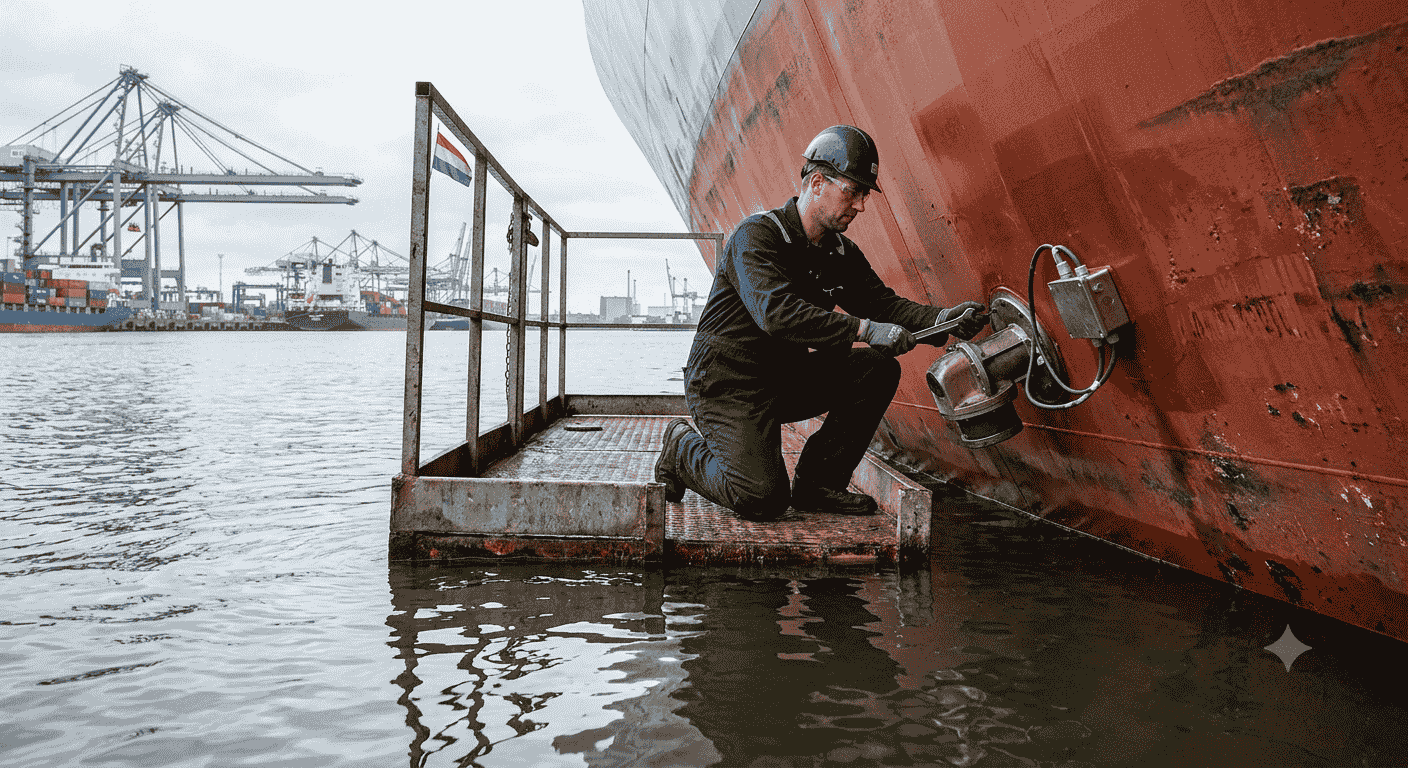
A marine speedlog in Netherlands is an instrument that measures how fast a vessel moves and how far it has travelled. Ships, workboats and offshore vessels use it every day for safe navigation. Master Systems supports Dutch customers with speedlog equipment and related marine electronics.
This page explains what a speedlog does, how it works and what to check before you choose one.
A marine speedlog, also called a speed log, shows the speed of a vessel. It also records the distance covered. The crew reads the data on a display on the bridge. Other systems on board, such as the radar, the chart system and the autopilot, can use the same data.
In simple terms, the speedlog tells the crew how quickly the vessel is moving. Therefore, it helps with route planning, arrival times and collision avoidance.
Speedlogs use different methods. The three most common types are:
Each type has its own strengths. For example, a Doppler log can show speed over the ground in shallow enough water, while an electromagnetic log shows speed through the water.
The Netherlands has busy ports, long inland routes and an active offshore sector. As a result, a marine speedlog in Netherlands is useful for many kinds of vessels.
Master Systems supports customers connected to major Dutch ports such as Rotterdam, Amsterdam and Den Helder.
A speedlog does more than show a number. It feeds data to other equipment, so its accuracy affects the whole bridge setup.
A marine speedlog in Netherlands should suit your vessel and the way you operate. Start with these questions.
With clear answers, a supplier can suggest the right model. Moreover, a clear brief shortens the quotation process.
Most speedlogs need a sensor fitted through the hull. For this reason, installation often happens during a dry dock or a planned maintenance period. A qualified technician should fit and calibrate the unit.
Regular care keeps the readings reliable. Good practice includes:
In addition, report any drift or sudden jumps in speed readings early. Small faults are easier to fix before they affect navigation.
Master Systems is a marine and industrial equipment supplier serving customers in many countries, including the Netherlands. For a marine speedlog in Netherlands, the team can help with:
If you already have a speedlog on board, the team can also advise on replacement or repair.
What is a marine speedlog in Netherlands used for?
It measures a vessel’s speed and distance travelled. Ships, workboats, offshore vessels and coastal vessels use it for navigation and passage planning.
What is the difference between speed through water and speed over ground?
Speed through water shows how fast the vessel moves relative to the water around it. Speed over ground shows how fast it moves relative to the seabed. Currents cause the two readings to differ.
Which type of marine speedlog is best?
It depends on your vessel, your operation and the rules that apply to you. Electromagnetic and Doppler logs are common choices. A supplier can compare them against your needs.
Does a speedlog connect to other bridge equipment?
Yes, in most cases. It can share data with radar, chart systems, autopilots and voyage data recorders. Check the output format before you buy.
How often should a speedlog be checked?
Check the readings during routine rounds and follow the maker’s service schedule. Test the sensor and calibration when the vessel is in dock or when the readings look wrong.
Can Master Systems supply a marine speedlog for vessels in Dutch ports?
Yes. Master Systems supports customers connected to ports such as Rotterdam, Amsterdam and Den Helder. Share your requirement and the team will advise on the next steps.
Need a marine speedlog in Netherlands? Contact Master Systems with your vessel details and requirement. The team will review it and reply with the next steps.