Marine Safety Company in Netherlands

alt="MASTER-SYSTEM"
WaveIcon

Every vessel depends on its safety equipment working the moment an emergency starts. Lifeboats, life rafts, fire extinguishers and distress beacons must all be inspected, serviced and certified at fixed intervals. Master Systems is a marine safety company in Netherlands that helps ship owners, managers and offshore operators keep this equipment ready, documented and compliant.

This page explains what a marine safety company does, which services we provide and how we work with you.

What Does a Marine Safety Company Do?

A marine safety company inspects, tests, repairs and supplies the equipment that protects people on board. Put simply, it makes sure the safety equipment works and that the paperwork proves it.

The work usually follows:

  • SOLAS (Safety of Life at Sea) requirements
  • The LSA Code for life-saving appliances
  • The FSS Code for fire safety systems
  • Flag state rules and class society requirements
  • Manufacturer instructions for each item

Our Services

Master Systems offers several services under one roof. As a result, many jobs can be combined into one visit, which saves time during a port call.

Life-saving appliances (LSA)

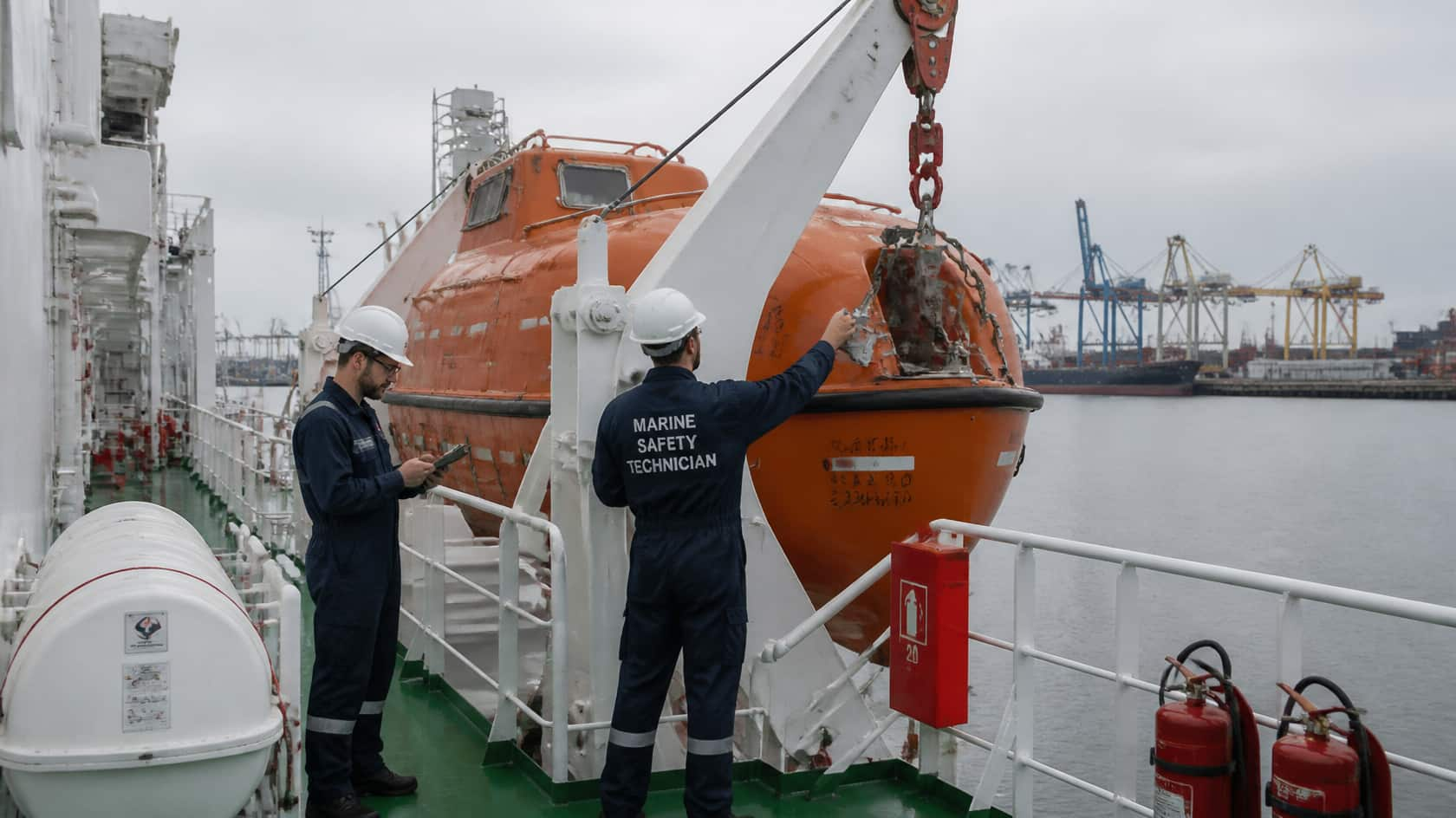
  • Lifeboats, rescue boats and davits
  • On-load and off-load release gear
  • Life rafts and hydrostatic release units
  • Lifejackets, lifebuoys and immersion suits

Fire-fighting appliances (FFA)

  • Portable and wheeled fire extinguishers
  • Fixed CO2 and other fire suppression systems
  • Breathing apparatus and compressed air cylinders
  • Fire detection systems

Radio and navigation equipment

  • GMDSS radio surveys
  • EPIRB and SART testing
  • Navigation equipment checks

Gas detection and calibration

  • Servicing of portable and fixed gas detectors
  • Calibration with traceable records

Supply

  • Replacement parts and new safety equipment where repair is not possible

Who We Work With

Our customers include:

  • Ship owners and ship managers
  • Offshore supply and crew transfer vessels
  • Offshore wind support vessels
  • Dredging and workboat operators
  • Shipyards and repair yards

How the Process Works

Working with a marine safety company in Netherlands should be simple. Our process has five steps:

  1. Request: You send the vessel name, port, arrival date and the equipment that needs service.
  2. Planning: We confirm the scope, the timing and the technicians needed.
  3. On-board service: Our technicians inspect, test and service the equipment, following the applicable rules and manufacturer guidance.
  4. Reporting: If an item fails, we explain the fault and recommend a repair or replacement. We only carry out extra work after your approval.
  5. Certification: You receive service reports and certificates for each item serviced.

Why Regular Safety Servicing Matters

First of all, regular servicing protects your crew. Equipment that is stored for long periods can corrode, leak or wear out without anyone noticing.

In addition, inspections are a legal requirement. Port State Control officers, class surveyors and flag inspectors check safety equipment and its certificates. Missing or expired records can lead to deficiencies or even detention.

Finally, planned servicing reduces costs. Finding a problem early is usually cheaper than an emergency repair or a delayed departure.

How to Choose a Marine Safety Company

When you compare service providers, it helps to check a few practical points:

  • Approvals: Does the company hold the manufacturer and class approvals needed for your equipment?
  • Scope: Can it handle LSA, FFA and electronics, or only one area?
  • Documentation: Are reports and certificates clear and accepted by surveyors?
  • Availability: Can it attend your vessel at the port and time you need?
  • Communication: Does it explain findings clearly and ask before doing extra work?

Overall, the right partner is easy to reach, clear about costs and consistent in its records.

Why Choose Master Systems

As a marine safety company in Netherlands, Master Systems focuses on practical, well-documented work. Specifically, we offer:

  • Several safety services from one team
  • Service carried out on board during port calls
  • Clear reports and certificates for every item
  • Straightforward advice on repair or replacement
  • A single point of contact for planning

Frequently Asked Questions

What does a marine safety company do?
It inspects, tests, services and supplies safety equipment on ships and offshore units, such as life-saving appliances, fire-fighting equipment and emergency radio equipment. It also issues the reports and certificates that show the equipment meets the rules.

How often does marine safety equipment need servicing?
Most equipment needs an annual inspection. Some items, such as lifeboat release gear, also need a more detailed check every five years. The exact interval depends on SOLAS, flag state rules and the manufacturer.

Can you service equipment while the vessel is in port?
Yes. We plan our work around your port call so that the service fits your schedule wherever possible.

Can several services be done in one visit?
Yes. Because we cover LSA, FFA, radio, navigation and gas detection, several jobs can often be combined into one visit.

What happens if equipment fails inspection?
We explain the problem and recommend a repair or replacement. We only continue with your approval.

What documents will I receive?
You will receive a service report and a certificate for each item serviced. These can be shown to class surveyors, flag inspectors and Port State Control officers.

How do I request a service?
Contact us with the vessel name, port, expected arrival date and the equipment to be serviced. We will confirm the scope and timing.

Contact Master Systems

If you need a reliable marine safety company for your vessel, contact Master Systems to plan your next inspection or service.