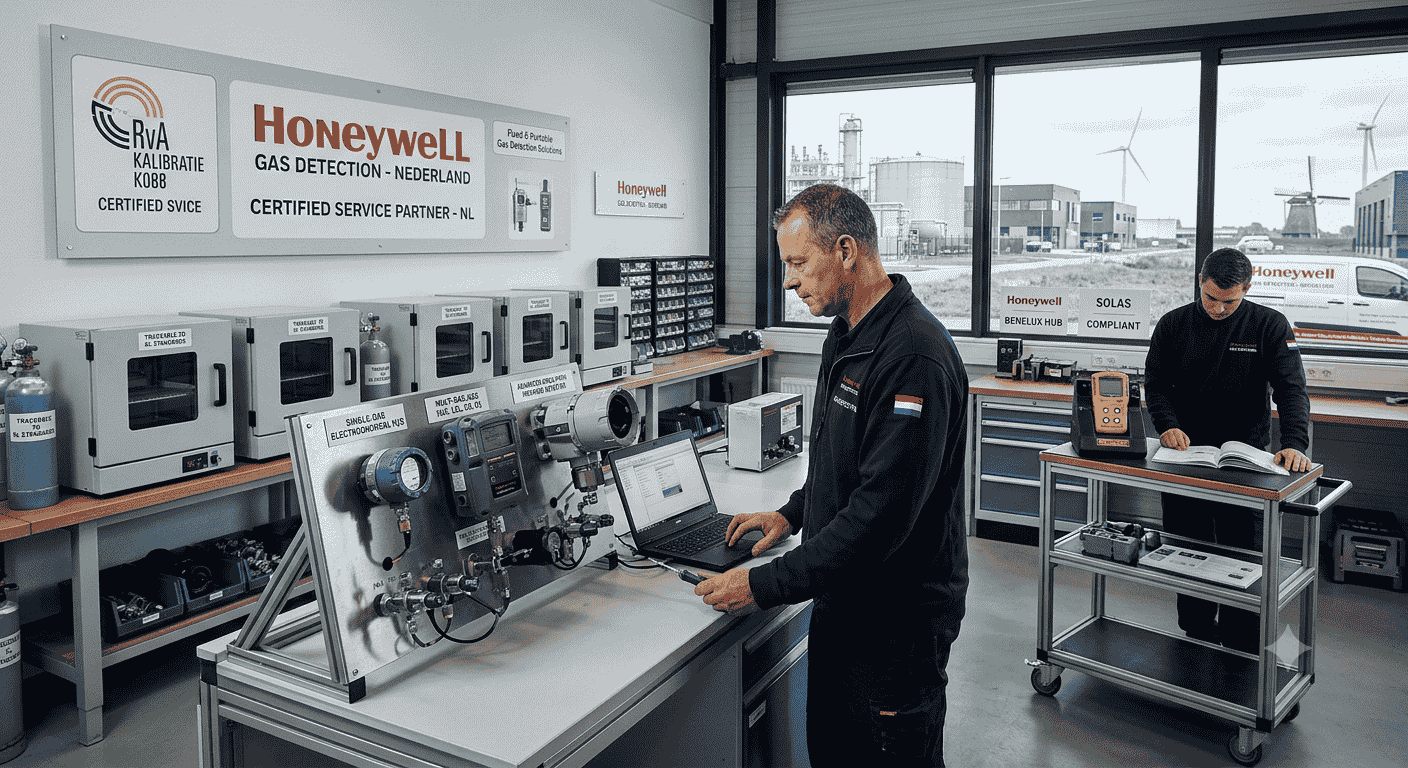

Honeywell Gas Detection Systems in Netherlands

alt="MASTER-SYSTEM"
WaveIcon

Gas leaks are a real risk on vessels, at terminals and inside industrial plants. A good detector gives early warning, so people can act before a leak turns into an incident. Master Systems supports Honeywell gas detection systems in Netherlands for marine and industrial teams that need reliable monitoring and clear technical help.

What Are Honeywell Gas Detection Systems?

Honeywell gas detection systems are devices that sense harmful gases in the air and warn people with alarms. They measure gases such as combustible gas, oxygen, hydrogen sulfide and carbon monoxide. Some units are portable and workers carry them. Others are fixed in one spot and watch an area all day.

Why Gas Detection Matters in the Netherlands

The Netherlands has busy ports in Rotterdam, Amsterdam and Den Helder. It also has shipyards, chemical sites and energy facilities. In these places, crews often work in enclosed spaces, tanks and engine rooms where gas can build up quietly.

Because of this, gas detection is a basic part of daily safety. Many sites also follow company rules and class society requirements, so they need detectors that work properly and stay calibrated. That is why many teams look for Honeywell gas detection systems in Netherlands with dependable local-language service and support.

Types of Honeywell Gas Detection Systems

Different jobs need different tools. Here are the main types:

  • Portable single-gas detectors: A worker wears one for daily checks or short tasks.
  • Portable multi-gas detectors: These track several gases at once, which suits confined space entry.
  • Fixed gas detectors: Teams mount them in a set position to monitor an area around the clock.
  • Control panels and alarms: These collect signals from detectors and trigger sirens or warning lights.
  • Calibration gas and accessories: This includes test gas, docking stations and replacement sensors.

Where Teams Use These Systems

You can find gas detectors in many settings. For example:

  • Vessels and offshore units
  • Ports and cargo terminals
  • Shipyards and repair yards
  • Oil, gas and chemical plants
  • Water treatment sites
  • Tanks, pits and other confined spaces

How Master Systems Supports Gas Detection

Master Systems supports customers across several countries, including the Netherlands. Our team helps with the full life of a gas detection system, not only the first sale.

  • Supply: We help you pick the right Honeywell detector for your gases and your site.
  • Calibration and bump testing: We help keep readings accurate, so alarms work when needed.
  • Sensor replacement and spare parts: Sensors wear out over time, so we help you replace them on schedule.
  • Documentation: We provide calibration records and certificates for audits and inspections.
  • Guidance: We explain how to use, test and store the equipment correctly.

In addition, a single point of contact saves time. You do not need to chase several suppliers for one detector.

How to Choose the Right System

Before you buy, check these points:

  1. Know your gases. List which gases you could meet on site.
  2. Choose portable or fixed. Portable units suit people who move around. Fixed units suit areas that need constant watch.
  3. Check the environment. Wet, dusty or hazardous areas need the right protection rating.
  4. Plan calibration. Decide who tests the device and how often.
  5. Confirm certification. Make sure the device meets the rules your site follows.

Finally, ask for support details before you commit. A detector is only useful when someone keeps it tested and working.

FAQs

What do Honeywell gas detection systems detect?
They detect gases such as combustible gas, oxygen, hydrogen sulfide and carbon monoxide. The exact range depends on the model and the sensors inside it.

What is the difference between portable and fixed gas detectors?
A portable detector goes with the worker. A fixed detector stays in one place and monitors that area continuously.

How often should a gas detector be calibrated?
It depends on the manufacturer guidance and your site rules. Many teams run a quick bump test before each use and a full calibration at regular intervals.

Can Master Systems support gas detectors in Dutch ports?
Yes. Master Systems supports customers in the Netherlands, including those working around Rotterdam, Amsterdam and Den Helder.

Do I need a gas detector for confined space work?
In most cases, yes. Confined spaces can hold toxic gas or low oxygen, so a tested detector is a standard safety step before and during entry.

Get Help With Gas Detection

If you need Honeywell gas detection systems in Netherlands, contact Master Systems. Tell us your gases, your site type and your timeline. Then we can suggest a clear and practical setup.