Crowcon Fixed Gas Detection in Netherlands

alt="MASTER-SYSTEM"
WaveIcon

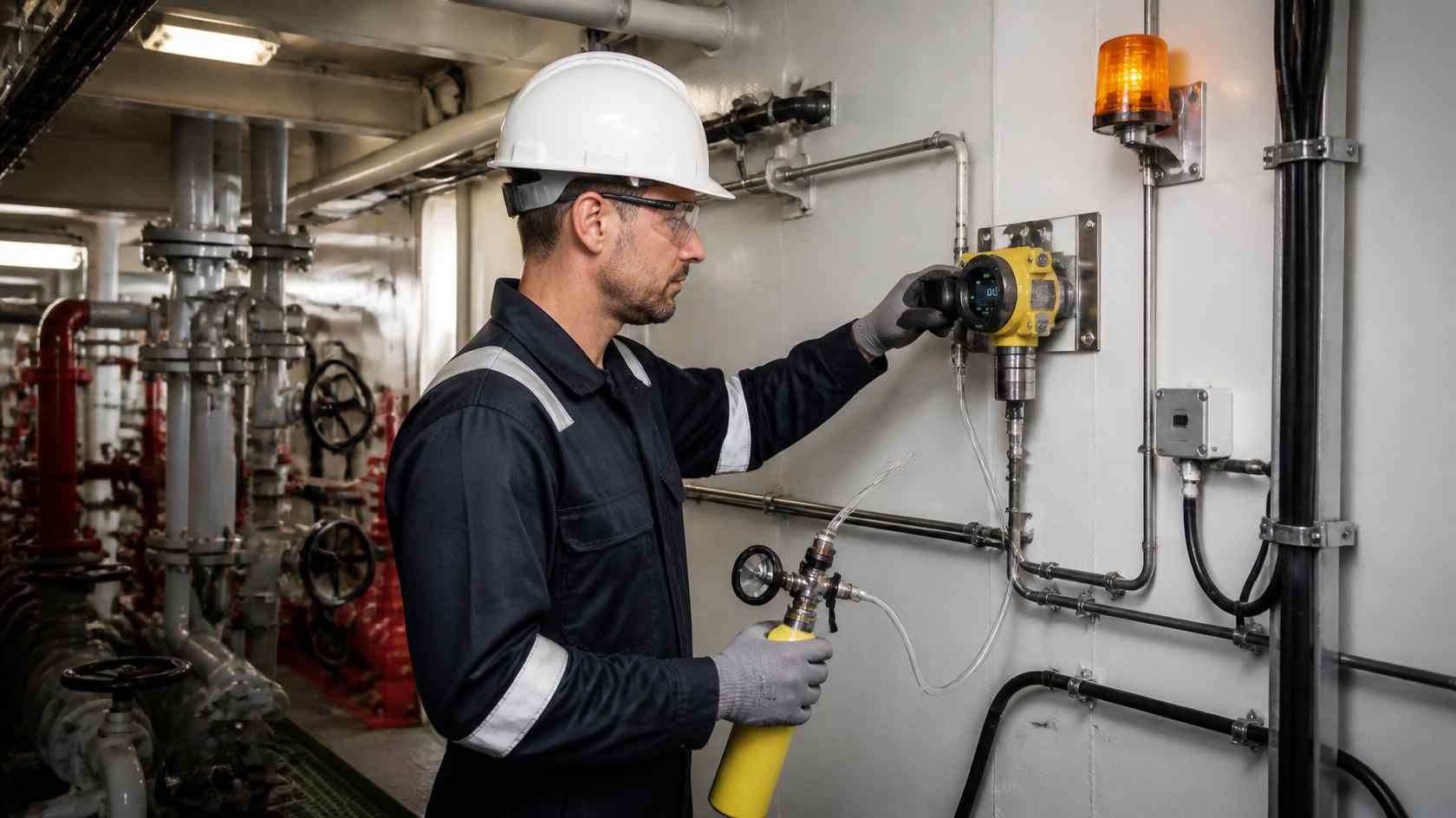
Many ships and offshore units handle or store gases that can be toxic, flammable or low in oxygen. A fixed gas detection system watches these areas all the time and raises an alarm when gas levels become unsafe. Crowcon is a well-known manufacturer of gas detection equipment used in marine, offshore and industrial settings. Master Systems provides service, calibration and repair for Crowcon fixed gas detection in Netherlands for ship owners, managers and offshore operators.

This page explains what a fixed gas detection system does, which services we offer and how the work is carried out.

What Is Fixed Gas Detection?

A fixed gas detection system is permanently installed in a space. It uses gas detectors (sensors) that send readings to a control panel. If a reading goes above a set level, the system gives an audible and visual alarm. In some cases, it can also start ventilation or shut down equipment.

Fixed systems are commonly used in:

  • Pump rooms and cargo handling areas on tankers
  • Double-hull and ballast spaces next to cargo tanks
  • Engine rooms, fuel preparation rooms and gas fuel spaces
  • Battery rooms and refrigeration plant rooms
  • Accommodation air intakes
  • Offshore process areas and modules

Crowcon Equipment We Service

Our technicians work on Crowcon fixed gas detection equipment, including:

  • Gas detectors for flammable, toxic and oxygen measurement, such as the Xgard, Xgard Bright and Xgard IQ ranges
  • Infrared flammable gas detectors, such as the IRmax
  • Control panels, such as the Gasmaster and Vortex controllers
  • Alarm devices, including beacons and sounders connected to the system
  • Sampling systems, where gas is drawn from a space to a detector

Our Services

For Crowcon fixed gas detection in Netherlands, Master Systems offers:

  • Calibration: We calibrate each detector with certified test gas and record the results.
  • Functional testing: We check alarms, relays, outputs and the connection to the control panel.
  • Sensor replacement: We replace sensors that are worn out, poisoned or past their expected life.
  • Troubleshooting and repair: We find and fix faults such as drifting readings, fault alarms or communication errors.
  • Installation and commissioning: We install new detectors and panels and set alarm levels.
  • Spare parts: We supply sensors, detector heads and other parts.
  • Documentation: We issue calibration certificates and service reports.

Rules and Standards

Fixed gas detection on board is covered by several rules, depending on the vessel type. These include:

  • SOLAS Chapter II-2, including gas detection requirements for tankers
  • The IGC Code for ships carrying liquefied gases
  • The IGF Code for ships using gas or low-flashpoint fuels
  • Flag state and class society requirements
  • Manufacturer instructions for calibration intervals and sensor life

In addition, equipment in hazardous areas must keep its certification, such as ATEX or IECEx. For this reason, repairs must use suitable parts and methods.

How the Service Works

Arranging service for Crowcon fixed gas detection in Netherlands should be simple. Our process has five steps:

  1. Request: You send the vessel name, port, arrival date, the system details and the service needed.
  2. Preparation: We check the detector types and gases, and prepare the right calibration gases and spare sensors.
  3. On-board work: Our technician calibrates and tests each detector and checks the control panel and alarms.
  4. Approval: If sensors or parts need replacing, we explain why and wait for your approval.
  5. Certification: You receive a calibration certificate and a service report.

Why Regular Calibration Matters

First of all, gas sensors change over time. Without calibration, a detector may read too low and fail to warn the crew.

In addition, regular checks are often required by flag state, class and company procedures. Inspectors may ask to see calibration records.

Finally, planned servicing helps avoid false alarms. As a result, crew trust the system and respond properly when a real alarm sounds.

Signs Your System Needs Attention

Contact a technician if you notice:

  • Fault or sensor failure messages on the control panel
  • Readings that drift or do not return to zero
  • Frequent false alarms
  • Detectors that do not respond to test gas
  • A calibration certificate that is due or expired

Why Choose Master Systems

Master Systems offers practical and well-documented gas detection services. Specifically, we provide:

  • Service for Crowcon fixed and portable gas detection equipment
  • Calibration with traceable test gases
  • On-board work during port calls
  • Clear certificates and reports
  • One team for gas detection, safety equipment and marine electronics

Frequently Asked Questions

What is a fixed gas detection system?
It is a permanently installed system of gas detectors and a control panel. It monitors an area continuously and raises an alarm if gas levels become unsafe.

How often should Crowcon fixed gas detectors be calibrated?
The interval depends on the sensor type, the manufacturer’s guidance and your company or class requirements. Many operators calibrate at least every six to twelve months.

Can you calibrate detectors on board?
Yes. We calibrate and test detectors on board using certified calibration gases.

What gases can the system detect?
Depending on the sensors fitted, a system may detect flammable gases, toxic gases such as hydrogen sulphide or carbon monoxide, and oxygen levels.

Do you replace sensors?
Yes. We replace sensors that fail calibration, show faults or reach the end of their service life.

Do you service other gas detection brands?
Yes. Besides Crowcon, we work on gas detection equipment from other manufacturers. Please share the make and model when you contact us.

What documents will I receive?
You will receive a calibration certificate and a service report showing the results for each detector.

Contact Master Systems

If you need service or calibration for a Crowcon fixed gas detection system, contact Master Systems to plan a visit during your next port call.