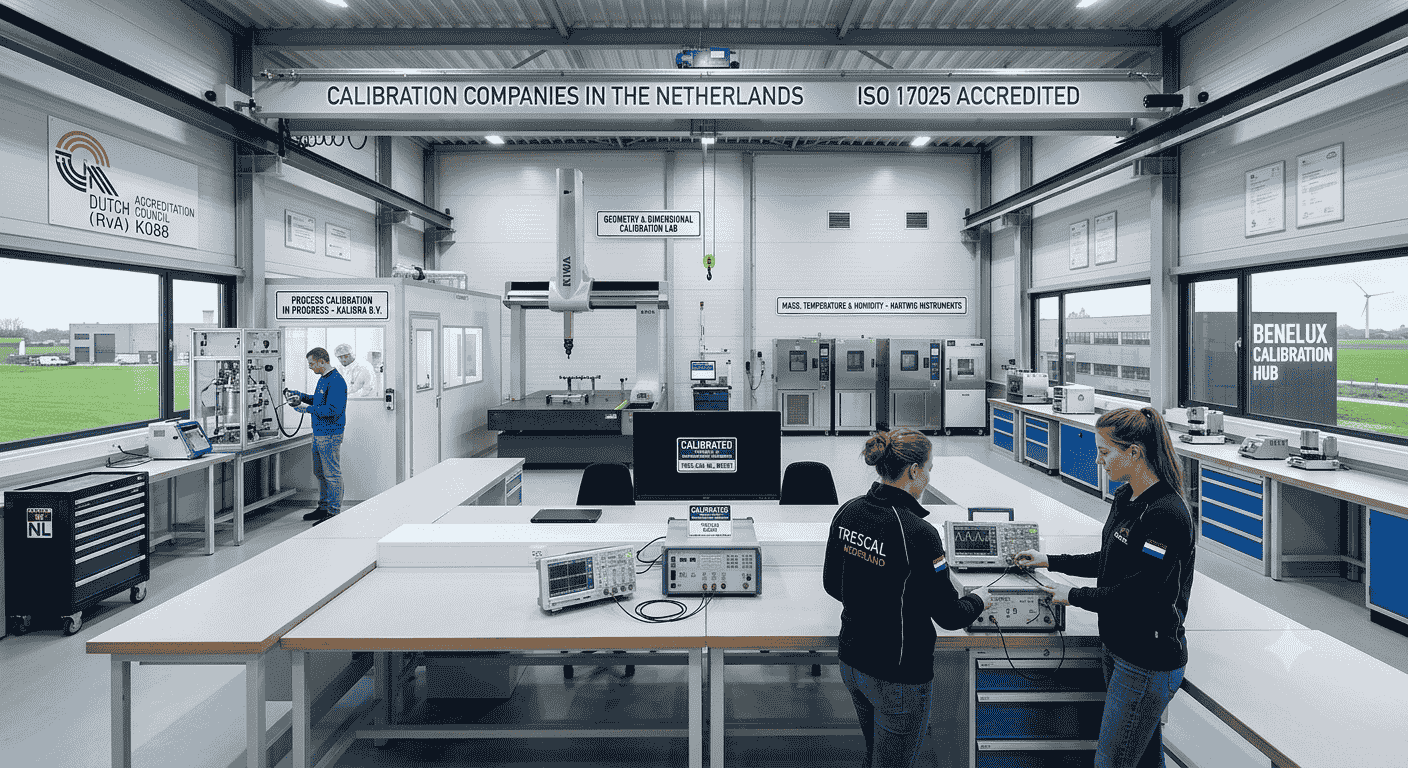

Accurate readings keep ships, plants and offshore sites safe. When a gauge or sensor drifts, the data you rely on stops being correct. That is why many operators search for calibration companies in Netherlands. The country has busy ports, strong marine activity and a large industrial base, so the need for reliable calibration is constant.
This page explains what calibration is, how to choose a provider and how Master Systems can support your requirements.
Calibration compares an instrument’s reading against a known reference standard. If the two values differ, the technician adjusts the instrument or records the error. The result is a calibration certificate that shows the instrument’s condition on the day of testing.
In short, calibration tells you whether your equipment can be trusted.
Instruments lose accuracy over time. Heat, vibration, moisture and regular use all play a part. Because of this, regular calibration helps you:
Not every provider suits every job. Before you decide, check the following points.
Also, ask whether the provider can calibrate several instrument types in one visit. This often reduces cost and downtime.
Many instruments need periodic checks. Common examples include:
The right calibration interval depends on the manufacturer’s guidance, the working environment and any class or regulatory rules.
Master Systems is a marine and technical services company headquartered in the UAE. It serves customers across several regions, including the Netherlands. Our team works with vessel operators, ship managers and industrial clients who need dependable equipment checks.
For clients in Rotterdam, Amsterdam and Den Helder, we plan visits around vessel schedules and port calls. This approach keeps disruption low. Moreover, we explain each step in plain language, so you always know what was tested and what the results mean.
If you are comparing calibration companies in Netherlands, Master Systems offers:
The process is simple and easy to follow.
What do calibration companies in Netherlands do?
They test instruments against reference standards, adjust them if needed and issue certificates. This confirms that the instruments give accurate readings.
How often should instruments be calibrated?
It depends on the instrument, how often you use it and the working conditions. Most manufacturers and regulators recommend a fixed interval, commonly once a year.
Can calibration be done onsite?
In many cases, yes. Onsite service suits vessels and plants that cannot send equipment away. Some instruments may still need a lab visit.
What is a calibration certificate?
It is a record that shows the instrument tested, the results and the reference standard used. Auditors and class surveyors often ask for it.
Does Master Systems provide calibration services in the Netherlands?
Yes. Master Systems supports clients in the Netherlands, including Rotterdam, Amsterdam and Den Helder. Contact the team with your equipment list and location for a quote.
Choosing among calibration companies in Netherlands comes down to accuracy, clear records and reliable service. Master Systems keeps the process simple and the reporting clear. Send us your instrument list, and our team will confirm the scope and timing.