NSR NGC-3000 Can Now Be Used as a Satellite Speed Log (SDME)

NSR NGC-3000 Can Now Be Used as a Satellite Speed Log
WaveIcon

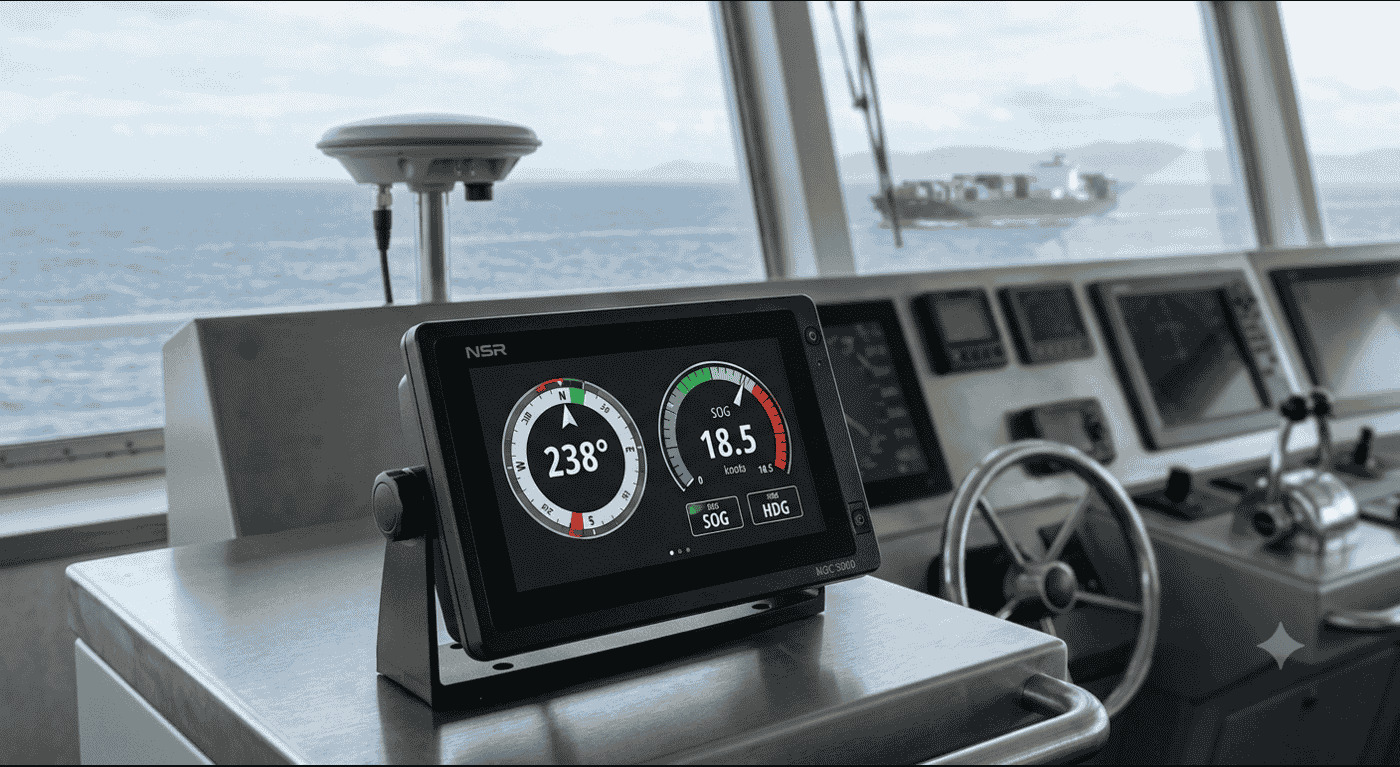
Yes. The NSR NGC-3000 can now be proposed as a Satellite Speed Log, also called Speed and Distance Measuring Equipment (SDME). DNV issued an EC type examination certificate for it in June 2026, based on IEC 61023. Before, it was approved mainly as a satellite compass. It still works as one.

What changed for the NGC-3000?

The NGC-3000 started as a satellite compass, also called a Transmitting Heading Device (THD). With the latest software, it now also meets the SDME requirements.

In short:

  • Before: approved as a satellite compass and GNSS unit. It was not offered as an SDME.
  • Now: it also holds SDME approval, so one system can cover both roles.
  • Still applies: vessel, flag, and class requirements decide if it fits a specific project.

What is a satellite speed log?

A satellite speed log measures a ship’s speed and the distance it travels. It uses satellite signals to measure speed over ground, so it needs no sensor under the hull. The industry calls this type of equipment SDME. Ships use it for navigation, and it feeds speed data to other bridge systems.

Which approvals does the NGC-3000 hold?

The SDME certificate comes from DNV SE, Notified Body no. 0098. It covers the equipment under the EU Marine Equipment Directive 2014/90/EU.

  • Certificate no.: MEDB0000C5T
  • Issued to: New Sunrise Co., Ltd. (NSR), Suzhou, China
  • Regulation: Implementing Regulation (EU) 2025/1533, item MED/4.7
  • Issue date: 9 June 2026
  • Expiry date: 8 June 2031
  • Performance standard tested: IEC 61023 (2007)
  • Also tested to: IEC 60945 (environmental and EMC), IEC 61162-1/-2 (interfaces), IEC 62288 (display presentation), IEC 62923-1/-2 (bridge alert management)

The certificate lists these regulations:

  • SOLAS Reg. V/19 and V/18
  • SOLAS Reg. X/3
  • IMO Res. A.694(17)
  • IMO Res. A.824(19), the performance standard for speed and distance devices
  • IMO Res. MSC.191(79)
  • IMO Res. MSC.302(87), the standard for bridge alert management
  • HSC Code, Chapter 13

The NGC-3000 also keeps its other DNV certificates for THD (ISO 22090-3) and GNSS equipment.

What does the NGC-3000 offer?

Here are the main points from the manufacturer’s data sheet:

  • 7-inch color touchscreen display
  • Heading accuracy of 0.4° RMS
  • Speed accuracy under 0.1 m/s
  • Maximum speed of 70 knots
  • Longitudinal and transverse speed
  • Position, SOG, COG, roll, and pitch data
  • Three output ports (IEC 61162-1/-2) plus one BAM/CAM input and output
  • Five display modes: Data, Plotter, Turning, Compass, and Satellite
  • IP66 antenna unit for outdoor use
  • 24 V DC power supply

What should you check before proposing it?
Two points matter here.

1. Software version. The approval only applies to units with specific software:

  • Display unit: version 2.x, where x is 03 or higher
  • Processor unit: version 7.x.yymmdd, where x is 13 or higher and the date code is 250627 or later

2. GPS only mode. The NGC-3000 can receive GPS, GLONASS, Galileo, BeiDou, and QZSS. However, the SDME certificate covers only the GPS receiver, tested to IEC 61108-1. As a result, IMO-compliant vessels should use the unit in GPS only mode.

Also confirm that the vessel, flag state, and class society accept the equipment.

FAQs

Is the NSR NGC-3000 approved as an SDME?
Yes. DNV SE issued EC type examination certificate MEDB0000C5T for the NGC-3000 as SDME in June 2026.

Can the NGC-3000 still be used as a satellite compass?
Yes. It keeps its THD approval under ISO 22090-3.

Does the NGC-3000 meet IEC 61023?
Yes. Performance testing followed IEC 61023 (2007).

Do I need to use GPS only mode?
On IMO-compliant vessels, yes. The SDME certificate covers only the GPS receiver.

Does every NGC-3000 unit carry the approval?
No. The approval applies to units running the software versions listed on the certificate.

Talk to Master Systems

Master Systems can help you check if the NGC-3000 fits your Satellite Speed Log or SDME requirement. Send us your vessel details and class requirements, and we will review them with you.