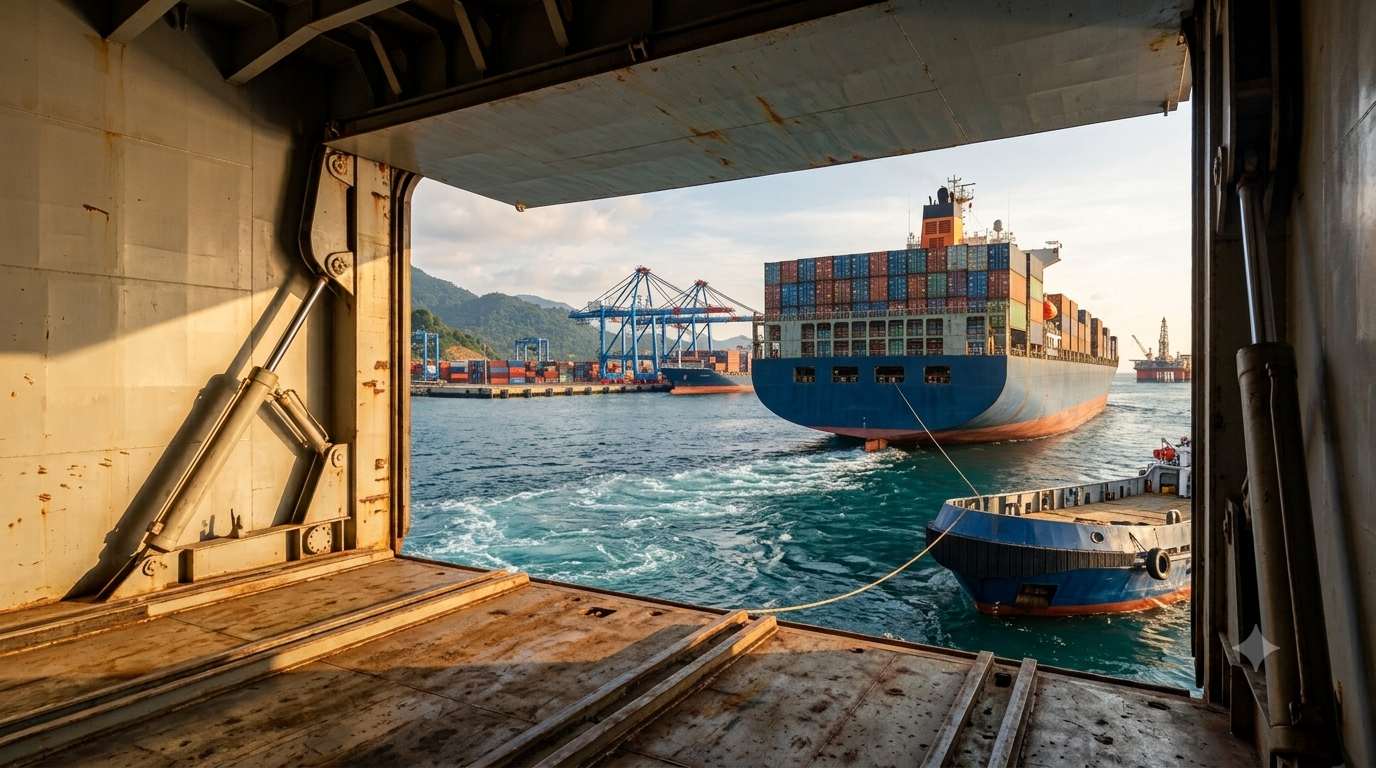
Angola has one of the largest offshore oil industries in Africa and a 1,600 km Atlantic coastline with several busy commercial ports. As a result, its waters host a mix of deep-sea cargo ships, tankers, FPSOs and a large fleet of offshore support vessels. This guide explains where vessels operate in Angola, which rules they need to meet, and which marine services they most often need during a port call or offshore rotation.
Offshore oil and gas. Most of Angola’s oil comes from deepwater fields in the Lower Congo and Kwanza basins, produced through FPSOs. The country produced around one million barrels per day in 2025, and new projects are being developed to keep output steady. Major operators include TotalEnergies, ExxonMobil, Chevron and Azule Energy, the joint venture formed by bp and Eni. Their fields depend on supply vessels, crew boats, anchor handlers and standby vessels, all of which need working navigation, communication and safety equipment.
Commercial ports. The main ports are:
Angola’s maritime administration is the Agência Marítima Nacional (AMN). It oversees ship registration, safety and port state control. Angola is also a member of the Abuja MOU, the port state control regime for West and Central Africa, so foreign vessels can be inspected for compliance with SOLAS, MARPOL, STCW and the MLC.
Offshore vessels face a second layer of checks. Oil companies and charterers usually run their own vessel inspections and audits, often under OCIMF OVID or IMCA guidelines, and these can be stricter than port state control. Equipment that is out of service or overdue for testing can delay a vessel’s acceptance onto a contract.
Navigation equipment. Radar, ECDIS, gyrocompass, GPS and AIS must work properly for safe navigation, especially in busy approaches and around offshore installations. Common jobs include radar repairs, gyro servicing and ECDIS software updates. See our pages on gyro service in Angola and radar repair in Angola.
GMDSS and radio surveys. Annual radio surveys are required for SOLAS ships, and offshore charterers often ask for evidence of tested radios before mobilisation. Typical work includes MF/HF, VHF DSC, EPIRB and SART checks.
VDR annual performance tests. SOLAS requires an annual performance test of the voyage data recorder or simplified VDR, with a certificate kept on board.
Life-saving appliances (LSA). Lifeboats, rescue boats, davits and release gear need annual inspections and five-yearly load tests. Offshore vessels also carry fast rescue craft that are used often and need frequent checks. See lifeboat inspection in Angola.
Fire-fighting appliances (FFA). Fire extinguishers, fixed CO2 systems, breathing apparatus and fire detection systems must be serviced at the intervals set by SOLAS and the FSS Code.
Gas detection. Tankers, offshore vessels and FPSO support craft depend on calibrated portable and fixed gas detectors for confined space entry and hot work.
Working in Angola calls for some advance planning:
Master Systems provides marine services in Angola for merchant ships and offshore vessels, covering navigation, communication and safety equipment. Our support includes:
We work with ship managers, offshore operators and agents to plan attendance in Luanda, Lobito and other Angolan ports. For local service details, see marine safety services in Luanda and JRC service in Angola.
Who regulates shipping in Angola?
The Agência Marítima Nacional (AMN) is Angola’s maritime authority. Port state control inspections follow the Abuja MOU procedures for West and Central Africa.
Which Angolan ports handle the most offshore support work?
Luanda and Soyo are the main supply bases for offshore operations, while Cabinda supports operations in the far north.
Do offshore vessels need extra inspections in Angola?
Often, yes. Oil companies and charterers usually carry out their own audits, which can be stricter than port state control.
Can marine services be arranged at anchorage or offshore?
Yes, depending on the location, launch availability and permissions arranged through the ship’s agent.
How far in advance should I book service in Angola?
As early as possible, ideally with the vessel’s ETA and equipment list, so engineers and spare parts can be arranged in time.
If your vessel is calling at an Angolan port or working offshore, our team can help you plan navigation, communication and safety services around your schedule. Contact us with your vessel details and location to arrange marine services in Angola.